Hopkins India Conference 2026
April 1-2, 2026 | Washington DC
The Hopkins India Conference, convened by the Gupta-Klinsky India Institute at Johns Hopkins University, is an annual flagship forum that advances international dialogue and collaboration across research, education, business, and policy. The 2026 conference, hosted at the Johns Hopkins University Bloomberg Center in Washington, D.C. in partnership with Indiaspora, focused on “Ideas, Innovation, and Impact for a Shared Future,” with discussions spanning geopolitics, economic strategy, artificial intelligence, climate, public health, and philanthropy. At a time of increasing geopolitical and economic fragmentation, the conference positioned the India–U.S. partnership as a central pillar of alignment across trade, technology, energy, and security.
Day 1 (April 1, 2026) consisted of keynotes and panels convened by global experts discussing India in the international stage. Day 2 (April 2, 2026) of the conference featured curated roundtables designed to enable deeper dialogue, peer learning, and collaboration across critical India–U.S. priority areas.
HIC 2026 Recap
The 2026 conference was framed around the theme “Ideas, Innovation & Impact for a Shared Future.” The discussions focused on geopolitics, economic strategy, artificial intelligence, climate, public health, and philanthropy. This recap captures the key moments from the conference featuring leaders from government, academia, industry, and civil society. Watch VideoOpening Keynote: Ambassador Namgya C. Khampa on “The India–U.S. Partnership in a Reordering World”
In her keynote address, Ambassador Khampa, Deputy Chief of Mission at the Embassy of India in Washington, D.C., described the India–U.S. partnership as one of India’s most significant foreign policy priorities of the 21st century. She reflected on the relationship’s evolution from cautious engagement to a strategic partnership shaped by shared economic, technological, security, and geopolitical interests.
Speaking in the context of a changing global order, Ambassador Khampa described the current moment as a shift from “idealized globalization to managed interdependence,” where resilience, trusted supply chains, and technology play a central role in global partnerships. She emphasized that India and the United States are well positioned to navigate these shifts through a relationship grounded in democratic values and long-term strategic alignment.
She highlighted several areas of growing cooperation. In defense, she pointed to the new 10-year framework announced in September 2025, focused on co-development and co-production. Bilateral trade has crossed $240 billion, with negotiations continuing under the February 2026 trade framework agreement. She also highlighted collaboration in artificial intelligence, semiconductors, quantum technologies, biotechnology, and space, including the inauguration of the Micron semiconductor facility in India earlier this year. The Ambassador also discussed cooperation in energy security and the Indo-Pacific, where the Quad continues to support coordination on maritime and regional issues. She described the six-million-strong Indian-origin community in the United States as a major strength of the partnership.
Ambassador Khampa connected India’s growth to its vision of Viksit Bharat by 2047. She highlighted India’s young population, startup ecosystem, and digital public infrastructure platforms such as Aadhaar and UPI as examples of innovation at scale. She noted that the United States brings leadership in innovation and capital, while India contributes scale, talent, and growing execution capability. In her closing remarks, Ambassador Khampa emphasized the importance of expanding participation in the partnership across sectors and sustaining public support in both countries to strengthen the long-term relationship.

Recorded Message: Shri Jayant Chaudhary, Minister of State with Independent charge for Skill Development and Entrepreneurship of India
Union Minister Jayant Chaudhary emphasized that people-to-people ties remain one of the strongest foundations of the India-U.S. relationship. In a video message to the Hopkins India Conference 2026, he highlighted the growing role of innovation, talent, and education in shaping bilateral cooperation, noting that more than 300,000 Indian students in the United States, along with the steady exchange of researchers and professionals, are driving a significant flow of knowledge and skills between the two countries.
Minister emphasized that the large Indian diaspora and student exchange serve as a “strongest bridge” and “force multiplier.” This partnership, driven by converging economic, strategic, security, and technological interests, has evolved significantly. While differences may arise, robust mechanisms ensure continued cooperation.
His remarks aligned with those of Ambassador Namgya C. Khampa, who described the six-million-strong Indian-origin community in the United States as a major source of strength for the partnership, with deep contributions across technology, business, academia, and public life.
Session Summaries (Day 1)
- Ambassador (Retd.) Atul Keshap, President, U.S.-India Business Council (USIBC)
- Moderator: Vivek Lall, Chief Executive, General Atomics Global Corporation
Dr. Lall framed energy security as inseparable from national security, arguing that emerging technologies such as artificial intelligence, autonomy, quantum systems, and advanced defense platforms will significantly increase future energy demands. He highlighted nuclear energy, including both small modular reactors (SMRs) and future fusion technologies, as critical to meeting long-term energy and industrial needs while supporting advanced manufacturing and AI-driven economies.
Amb Keshap emphasized that the current moment presents a major opportunity for deeper India–U.S. cooperation across energy, trade, defense, and technology. Reflecting on lessons from the COVID-era supply chain disruptions and current geopolitical instability, he argued that the two countries are increasingly aligned in their strategic priorities and capable of building more resilient and diversified supply chains together. He also called for greater ambition in bilateral trade and commercial collaboration, particularly in sectors such as energy, nuclear technology, and advanced manufacturing.
A significant portion of the discussion focused on nuclear energy and the potential of emerging technologies such as SMRs to support India’s future industrial growth. The speakers noted that recent policy developments in India have opened new opportunities for bilateral collaboration in civil nuclear energy, while advances in reactor design and materials science are making nuclear technologies safer and more adaptable across different geographies. At the same time, they stressed that supply chain resilience, manufacturing capacity, and cost competitiveness will remain central challenges for scaling these technologies globally.
The conversation also explored the broader role of innovation ecosystems in shaping the future of the India–U.S. partnership. Both speakers pointed to growing collaboration between technology hubs in India and the United States, highlighting Bengaluru, Hyderabad, California, and Texas as important centers of joint innovation. They emphasized that democratic institutions, research ecosystems, entrepreneurial risk-taking, and talent development provide both countries with a long-term advantage in emerging technologies.
- Chair: Suchita Sonalika, Director, North America, Confederation of Indian Industry
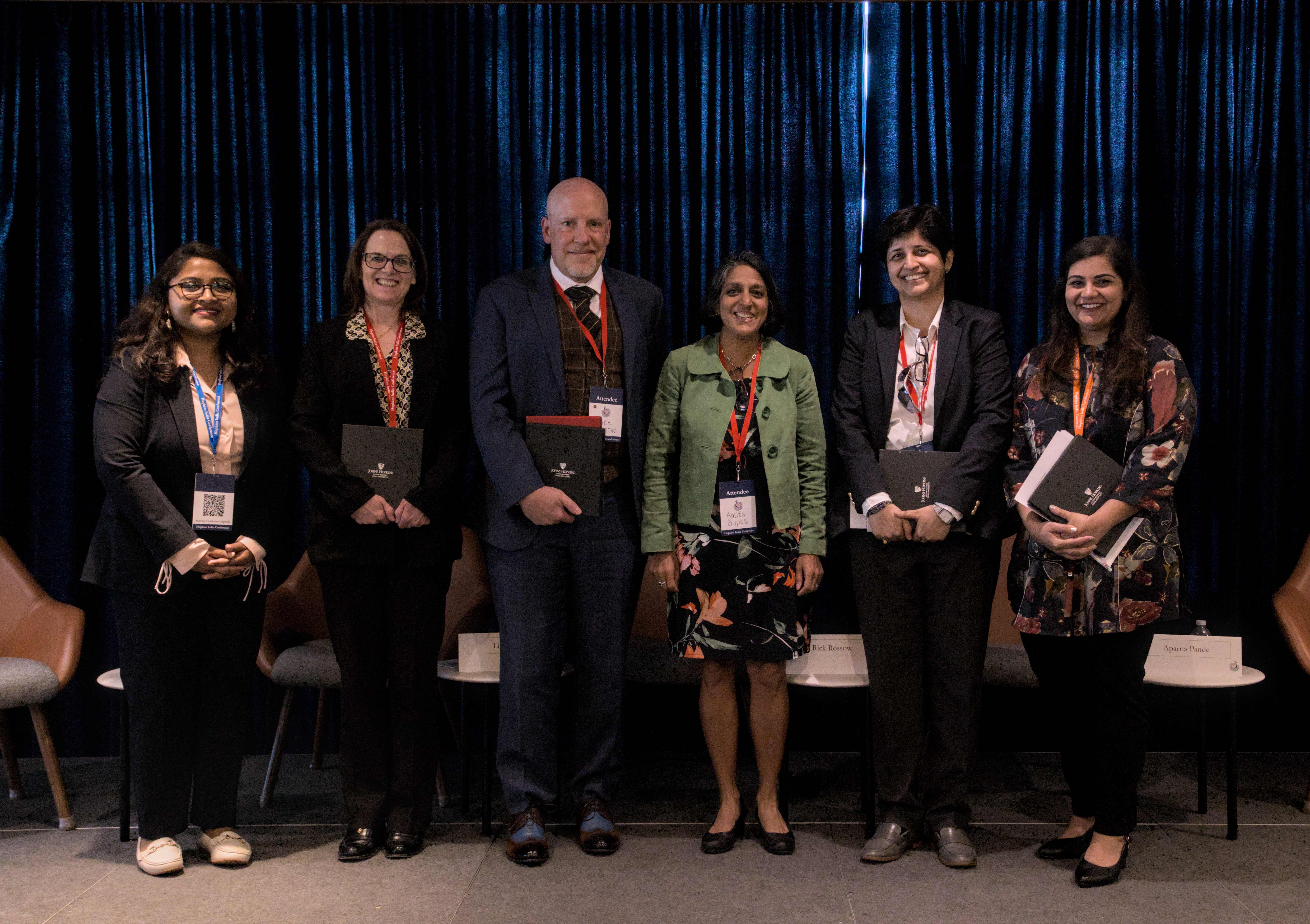
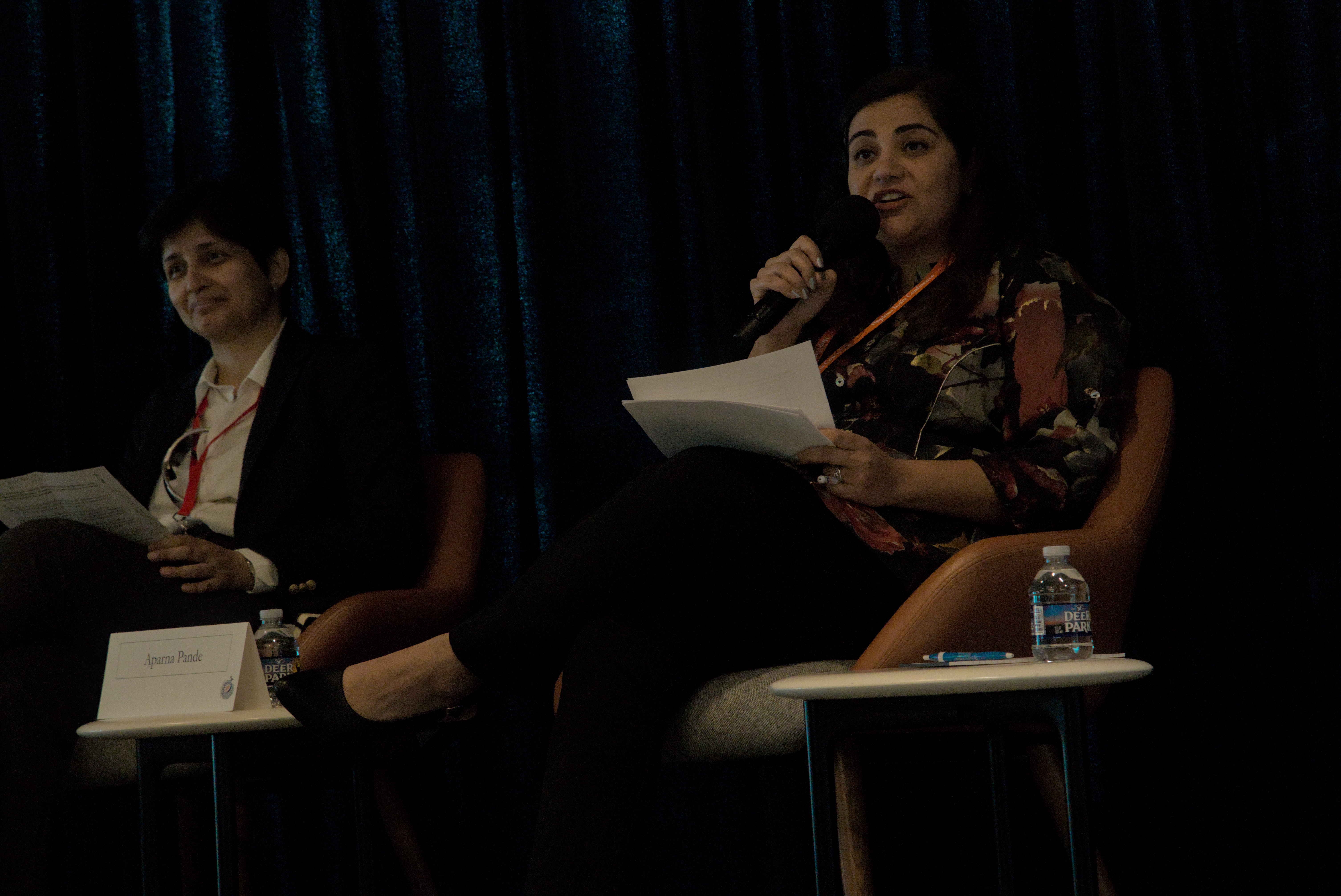
- Aparna Pande, Senior Fellow, India and South Asia, Hudson Institute
- Lisa Curtis, Senior Fellow and Director, Indo-Pacific Security Program, Center for a New American Security
- Rick Rossow, Senior Adviser and Chair, India and Emerging Asia Economics, Center for Strategic and International Studies (CSIS)
The moderator Suchita Sonalika referenced India’s 2025 Economic Survey, which outlines three possible global scenarios ranging from “managed disorder” to a “systemic shock cascade,” reflecting a world where volatility, cautious capital flows, and politicized trade are becoming the norm.
Aparna Pandey discussed India’s geopolitical strategy, describing it as rooted in multipolarity, multilateralism, and multi-alignment. She noted that recent global developments have reinforced India’s emphasis on strategic autonomy while also increasing the importance of partnerships with middle powers such as Japan, France, the UAE, Australia, Vietnam, and the European Union. She emphasized that India increasingly views its strategic neighborhood as extending from the Gulf of Aden to the Straits of Malacca.
Lisa Curtis focused on the trajectory of India–U.S. relations following tensions in late 2025 related to the India-Pakistan conflict and tariff disputes. She noted that the February 2026 interim trade agreement helped stabilize the relationship, while cooperation continued in areas such as critical minerals, semiconductors, artificial intelligence, and civil nuclear energy. Curtis also highlighted concerns around the absence of a Quad summit in 2025, warning that momentum in Indo-Pacific coordination must be restored.
Rick Rossow framed India as a future $20 trillion economy and one of three major global economic centers alongside the United States and China. While acknowledging that India’s manufacturing ambitions under Make in India remain incomplete, he pointed to significant economic growth and policy shifts toward greater trade openness and production-linked incentives. Rossow emphasized that implementation capacity at the state level remains a key determinant of India’s success in integrating into global supply chains. He also identified the race between India’s labor-cost advantage and advances in robotics and AI-driven automation as a defining economic challenge for the coming decade.
Panelists agreed that India’s diversified partnerships and middle-power strategy provide resilience in an increasingly uncertain global environment, while stronger execution, restored trust in key partnerships, and sustained regional engagement will remain critical to India’s long-term economic and strategic positioning.
- Sunil Wadhwani, Managing Partner, SWAT Capital; President, Wadhwani AI; President, WISH Foundation
Sunil Wadhwani explored how artificial intelligence (AI) can be deployed to address large-scale social challenges across healthcare, education, and agriculture, particularly in low-resource settings. Framing AI as both a technological and societal turning point, he argued that the real challenge is not building sophisticated models but ensuring that AI solutions reach and benefit underserved populations at scale.
Mr. Wadhwani highlighted the imbalance in global AI investment, noting that while billions of dollars are directed toward commercial applications, comparatively little funding has historically supported AI systems focused on public service delivery for low-income populations. He emphasized the need for cost-effective, scalable AI tools designed specifically for the realities of the Global South.
Drawing on examples from Wadhwani AI, he described the development of small, task-specific language models capable of running on smartphones without cloud computing infrastructure. A central theme of the keynote was that technology alone does not guarantee impact. Mr. Wadhwani stressed that developing AI models represents only a small part of the challenge, while deployment through government systems, state institutions, and frontline workers determines whether solutions succeed or fail. He described governments as the only institutions with the scale and reach necessary to deliver services to large populations, particularly in sectors such as public health and education.
The keynote also positioned India as an important testing ground for scalable AI solutions for the Global South. Mr. Wadhwani shared examples of AI platforms already deployed across millions of users, including diagnostic systems supporting community health officers and AI-powered reading tools introduced in state education systems. Several of these models are now being adapted for countries including Ethiopia, Rwanda, and Kenya.
Wadhwani emphasized that proximity to end users and practical implementation matter more than technical sophistication alone. By grounding AI innovation in real-world delivery systems, he argued, emerging technologies can play a meaningful role in accelerating inclusive development at population scale.
- Chair: André Nogueira, Assistant Professor, Johns Hopkins School of Nursing
- Anshu Gupta, Founder, Goonj and Magsaysay Awardee
- Elena Ateva, Director, Climate & Disaster Resilience for Asia, Eurasia, Middle East, and Africa, Americares
- Rachel Marcus, Executive Director, Johns Hopkins Institute for Planetary Health
- Sweta Chakraborty, CEO – North America, We Don’t Have Time
Moderated by André Nogueira, the discussion brought together perspectives from humanitarian action, global health, climate resilience, and communications.
Rachel Marcus framed climate change as one dimension of a broader planetary crisis, noting that humanity has already crossed seven of nine planetary boundaries, including biodiversity loss, freshwater depletion, and land-use change. She emphasized that addressing these interconnected challenges requires interdisciplinary collaboration across sectors and institutions.
Anshu Gupta focused on the importance of dignity and agency in development and disaster response. Drawing on the Goonj model, he argued that communities should not be treated as passive recipients of aid, but as active participants in shaping solutions. He described how community-led approaches that exchange labor for resources create ownership, participation, and long-term resilience.
Elena Ateva highlighted how climate impacts are experienced unevenly, particularly by women and vulnerable populations. She shared examples of communities identifying practical climate-health solutions, including requests for solar panels during extreme heat conditions, illustrating the importance of listening directly to lived experiences rather than relying solely on standardized assessments.
Sweta Chakraborty emphasized that the climate crisis is also a communications challenge. Drawing from behavioral and cognitive science, she argued that effective climate communication requires the same rigor as public health interventions, warning that poorly designed messaging can undermine trust and public engagement.
A recurring theme throughout the discussion was the value of local and indigenous knowledge systems. Panelists stressed that expertise is widely distributed and that solutions are often most effective when communities are involved from the beginning of the design process. Examples shared during the session demonstrated how practical, locally grounded knowledge can succeed where formal systems fall short.
Despite the scale and urgency of the challenges discussed, the panel maintained a forward-looking focus on collaboration, creativity, and community-centered problem solving.
- Chair: Alex Triantis, Dean, Carey Business School, Johns Hopkins University
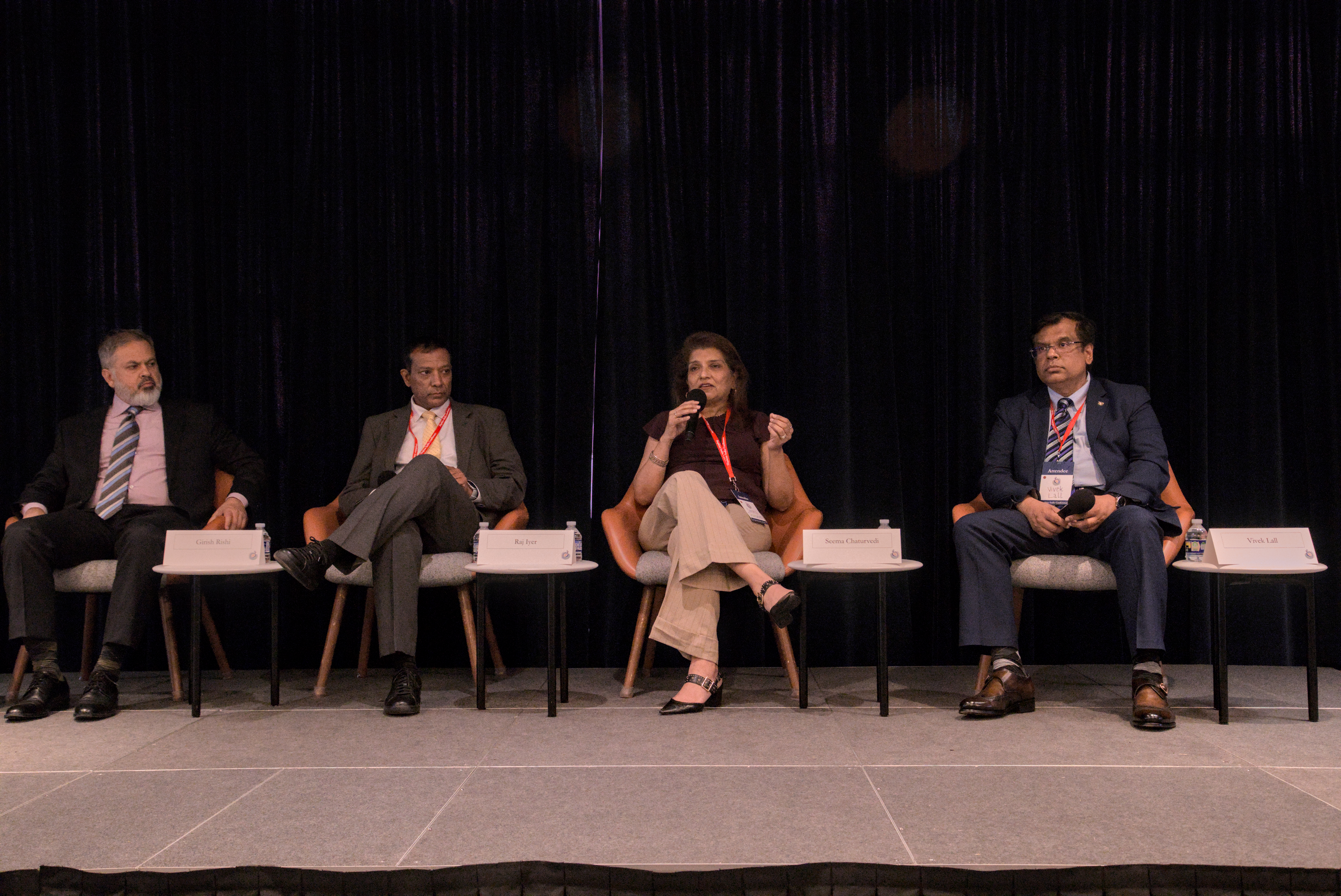
- Girish Rishi, CEO & Chairman, Cognite
- Raj Iyer, President, Global Public Sector Markets, T-Second; Chief Executive Officer, Digital Excellence
- Seema Chaturvedi, Founder & Managing Partner, Achieving Women Equity Funds; Founder & Managing Director, The Accelerator Group
- Vivek Lall, Chief Executive, General Atomics Global Corporation
Moderated by Alex Triantis, the conversation focused on what it will take for India to build globally competitive deep tech companies and innovation systems.
Girish Rishi outlined three major barriers to scaling deep tech in India: trusted data systems, data sovereignty requirements, and infrastructure costs. He argued that India’s large digital population and expanding broadband access provide a significant advantage, but noted that Indian enterprise technology companies still face a global trust gap. He also emphasized that many Indian conglomerates continue to treat technology as an operational cost rather than a strategic investment, limiting opportunities for startups to scale domestically through strong anchor customers.
Raj Iyer highlighted the complexity of building deep tech hardware companies compared to software startups. He pointed to India’s relatively low R&D investment, currently around 0.5% of GDP, as a major structural limitation when compared to countries such as the United States, China, and Israel. Iyer also discussed the need for stronger research-to-commercialization pipelines, fabrication infrastructure, and long-term capital to support innovation in areas such as defense and advanced manufacturing.
Seema Chaturvedi argued that deep tech requires “infrastructure patience” rather than traditional venture capital timelines. She described the importance of layered capital structures involving philanthropy, development finance institutions, and patient investors to support long commercialization cycles. Chaturvedi also emphasized the role of Tier 2 industrial families as potential long-term investors who can provide both capital and market demand.
Vivek Lall reinforced the importance of industry partnerships and highlighted collaborations with startups in areas including AI and semiconductors. The panel also addressed gender equity in venture funding, with Chaturvedi challenging assumptions about the lack of women founders in deep tech and arguing that inclusion represents a significant untapped investment opportunity rather than a diversity initiative alone.
Panelists pointed to signs of momentum, including India’s Make in India policies, government-backed innovation funds, and growing support for domestic manufacturing and defense technologies. The conversation also underscored that scaling deep tech in India will require stronger corporate participation, significantly higher research investment, and closer collaboration between industry, academia, and government institutions.
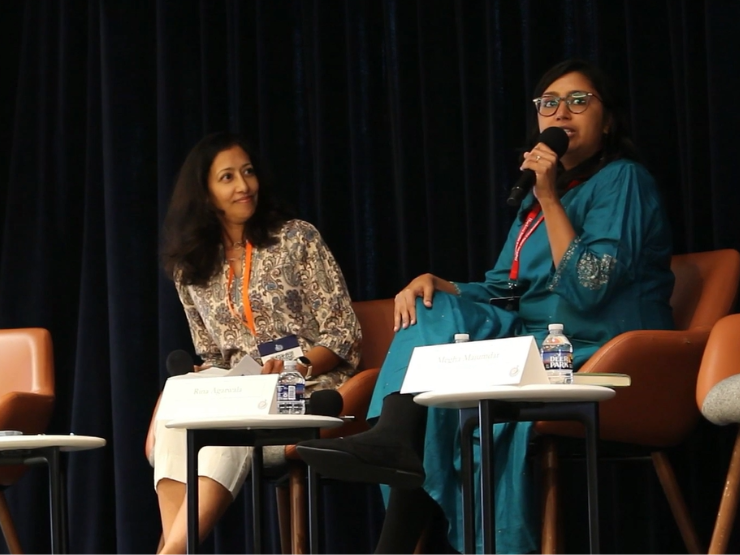
- Moderator: Rina Agarwala, Professor of Sociology, Johns Hopkins University Megha Majumdar, Author, 2025 National Book Award Finalist, and Oprah’s Book Club Pick
- Centered around Majumdar’s latest novel, A Guardian and a Thief, the conversation explored how storytelling can illuminate the human dimensions of planetary crisis and displacement.
Set in a near-future Kolkata shaped by flooding, extreme heat, food scarcity, and migration, the novel imagines a world where climate disruption reshapes family life, social relationships, and moral decision-making. Majumdar described the story as an exploration of “how to live a moral life in an unstable time,” drawing inspiration from scientific projections about Kolkata’s climate future and her own personal connection to the city where she grew up.
A major theme of the discussion was climate migration and the idea of a fictional “climate visa,” which serves as a central element in the novel. Majumdar explained that she introduced the concept as a way of imagining future systems of humanitarian response as climate pressures intensify globally. The conversation examined how migration is often framed narrowly as an economic or political issue, while overlooking its emotional and human dimensions.
Drawing on her research on migration and labor, the moderator Professor Rina Agarwala connected themes from the novel to real-world migration patterns, including family separation, emotional attachment to home, and the tensions that can exist between migrants and their countries of origin.
Majumdar also reflected on her own experience moving from Kolkata to the United States as a student, describing migration as both transformative and deeply painful. She spoke about the pride and opportunity associated with building a new life abroad, alongside the grief of leaving behind family, language, and familiar forms of community. Fiction, she argued, creates space to sit with these contradictions and examine the emotional complexity of displacement and belonging.
The conversation further explored questions of class, inequality, and morality in both India and the diaspora. Majumdar discussed how class divisions shaped her early understanding of injustice growing up in Kolkata, and why those dynamics became central to her writing. In the closing portion of the discussion, both speakers reflected on morality in times of scarcity and crisis, asking how individuals define responsibility, community, and care when systems themselves are unequal and unstable. Rather than offering definitive answers, the conversation emphasized the importance of engaging seriously with these difficult questions as societies confront an increasingly uncertain future.
- Chair: Alex Counts, Executive Director, India Philanthropy Alliance (IPA)
- Deepak Raj, Founder, Raj Associates; Former Chair, Pratham USA; Founder of the Raj Center on Indian Economic Policies at Columbia University
- Kalpana Kanthan, Chief Development Officer, American India Foundation
- Raj Gupta, Founder and Advisory Board Chair, GKII at Johns Hopkins University
Moderated by Alex Counts, the discussion focused on how philanthropic models can remain strategic, sustainable, and relevant across generations.
Deepak Raj reflected on the rapid growth of Indian American philanthropy, noting that diaspora giving has increased significantly over the past decade as nonprofit organizations have strengthened governance, accountability, and donor engagement. He emphasized the importance of building trust-based relationships and aligning philanthropic efforts with clear institutional missions and long-term impact.
Raj Gupta argued for focused philanthropy over fragmented giving. He encouraged donors to support a smaller number of institutions and initiatives more deeply, rather than distributing resources across numerous causes. Gupta also raised concerns about the long-term sustainability of India-focused philanthropy as emotional ties to India evolve across generations of the diaspora. He suggested that organizations will increasingly need to frame their work through broader global themes such as equity, education, healthcare, and poverty alleviation to engage future donors.
Kalpana Kanthan highlighted the importance of engaging younger generations early through structured programs and leadership opportunities. She discussed initiatives such as the American India Foundation’s Youth Ambassador Program, which introduces high school students to fundraising, service, and community engagement, helping cultivate long-term philanthropic participation.
Panelists emphasized that the landscape of philanthropy is changing alongside broader demographic and cultural shifts. While first-generation immigrants often maintain strong personal ties to India, younger generations may connect more strongly to universal social causes and global development goals. Panelists agreed that organizations must adapt their messaging, strengthen institutional credibility, and create meaningful pathways for engagement in order to sustain support over time.
The conversation also highlighted the growing maturity of India-focused nonprofit infrastructure, with panelists noting improvements in governance standards, donor transparency, and collaborative fundraising platforms. Across the discussion, a common theme emerged: long-term philanthropy depends not only on financial contributions, but on building trust, relationships, and a shared sense of purpose across generations.
 |
 |
 |
 |
 |
 |
Roundtable Summaries (Day 2)
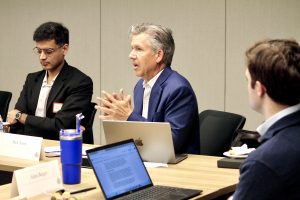
The Gupta-Klinsky India Institute’s Reimagining Women’s Leadership in STEMM Research: Institutional Reforms That Work roundtable brought together university leaders, national research funders, civil society organizations, UN agencies, and India RISE Fellows to examine institutional barriers limiting women’s advancement in STEMM research leadership. Participants noted that while women represent approximately 43–48% of STEMM graduates in India, they continue to hold fewer than 10% of institutional research leadership positions. The discussion focused on five areas for reform: academic systems and promotion pathways, leadership pipelines and sponsorship models, financing and accountability mechanisms, work-life integration supports, and broader social and cultural norms that shape professional advancement. Throughout the session, participants emphasized that the challenge is not simply one of recruitment, but of retention, opportunity, and institutional design.
The roundtable resulted in the development of a White Paper, intended as a practical roadmap for academic institutions, funders, and policymakers across India. Participants identified four major transition points where women are disproportionately lost from the research pipeline and discussed the cumulative effects of the “invisible tax” of administrative and coordination labor that often falls to women faculty. Three immediate next steps were agreed upon: formation of a cross-institutional Working Group to advance priority reforms within 60 days, publication and dissemination of the White Paper, and institutional commitments to pilot at least one reform initiative over the next 24 months.
Participants
- Dr. Anita Shet, Program Chair, India RISE Fellowship (Session Chair) Ambassador Geeta Rao Gupta, Former U.S. Ambassador-at-Large for Global Women’s Issues; Senior Fellow, UN Foundation
- Dr. Prabhdeep Kaur, Professor & Chair, Isaac Centre for Public Health, IISc Bangalore; Co-Chair, India RISE Steering Committee
- Dr. Kamini Walia, Senior Scientist, ICMR New Delhi; Co-Chair, India RISE Steering Committee
- Kalpana Kanthan, Chief Development Officer, American India Foundation
- Kanta Singh, Country Representative, UN Women India
- Dr. Ravinder Kaur, Professor Emerita, Sociology & Social Anthropology, IIT Delhi
- Abhilasha Sinha, Startup Operator & Educator, STEMtheGap, IIT Delhi
- Dr. Sushama Agarwalla, India RISE Fellow, IIT Hyderabad
- Dr. Anubhuti Joshi, India RISE Fellow, AIIMS Rishikesh
- Dr. Debyashreeta Barik, India RISE Fellow, NISER Bhubaneshwar
- Neetisha Besra, Program Director, India RISE Fellowship and Director India, GKII
- Dr. Amita Gupta, Johns Hopkins School of Medicine
- Prof. Robert Bollinger, Johns Hopkins University
The Beyond Coders: Educating India’s AI Governance Workforce roundtable brought utilized professional experience from academia, industry, philanthropy, and policy to examine emerging gaps in India’s AI governance ecosystem. Participants noted that while India has developed a large and highly skilled AI workforce, systems for oversight, accountability, and governance have not kept pace with the rapid expansion of AI across sectors including healthcare, finance, education, and public infrastructure. The discussion focused on four interconnected themes: the scale and pace of AI deployment in India, governance and accountability challenges, the need for interdisciplinary educational models, and the emergence of new professional roles that bridge technical expertise with ethics, regulation, and public policy.
A primary outcome of the session was the launch of a co-authored White Paper, Professionalizing Responsible AI in India: Educating the AI Stewards, which will examine India’s governance and accountability gaps, compare international approaches, define core stewardship competencies, and propose new educational and credentialing pathways. Participants also discussed the growing need for professionals equipped to oversee the societal implications of AI systems, including roles such as Clinical AI Governance Leads, AI Auditors and Risk Officers, and senior institutional leaders with training in responsible AI oversight. Several participants pointed to national investments in AI governance education in China and Europe as examples of how other countries are approaching this challenge at scale.
Participants
- Dr. Ritu Agarwal (Chair), Wm. Polk Carey Distinguished Professor & Co-Director, CDHAI, Johns Hopkins Carey Business School
- Jeffrey D. Bean, Program Manager, Technology Policy, ORF America
- Aidan Berger, Strategy Capital Analyst, Patrick J. McGovern Foundation
- Sameer Boray, Senior Manager, Policy, Trust, Data & Technology, ITI Council
- Rumman Chowdhury, CEO, Humane Intelligence
- Pedro Conceição, Director, Human Development Report Office, UNDP
- Divyansh Kaushik, Vice President, Beacon Global Strategies
- Kassandra Karpathakis, AI Policy Senior Program Officer, Gates Foundation
- Aalok Mehta, Director, Wadhwani AI Center, CSIS
- Jyoti Panday, Regional Director, Internet Governance Project, Georgia Tech School of Public Policy
- Chirag Parikh, Professor of Medicine & Co-Director, RAISE Center, Johns Hopkins School of Medicine
- Ambrish Rawat, Senior Research Scientist, AI Security & Privacy, IBM
- Amit Sinha Roy, Principal Advisor, CII Digital
- Rick Smith, Professor of Practice & Executive Advisor to the Dean, Johns Hopkins Carey Business School
- Kunal Pal, Executive Director, Gupta-Klinsky India Institute, JHU (Facilitator/Observer)
- Shruthi Srivatsan, Sr. Research Project Coordinator, CDHAI, JHU Carey Business School (Facilitator/Observer)
- Vandana Yadav, Advisor, Human Capital Development Lab, JHU Carey Business School (Facilitator/Observer)
Led by researchers, clinicians, youth advocates, policymakers, and young people from the United States and India to address the growing crisis in adolescent mental health and wellbeing, the Anxious Generation: Protecting Youth Wellbeing in a Digital-First World roundtable discussed evidence showing significant declines in wellbeing among young adults globally, particularly around loneliness, emotional regulation, and social disconnection. The conversation examined both the relational and digital dimensions of the crisis, noting that with India’s counsellor-to-population ratio at roughly 1 per 100,000, many young people are increasingly turning to AI tools and digital platforms for emotional support. Participants also emphasized that poverty, caste, gender discrimination, and other forms of structural inequity remain central drivers of mental health outcomes and must be addressed alongside digital harms.
Four concrete outcomes emerged from the session. Participants committed to developing a Youth Wellbeing Action Brief for dissemination across India–US policy, education, philanthropy, and digital governance networks. Through a collective voting exercise, the group identified eight priority interventions across schools, families, and digital platforms, including neuroscience-informed digital literacy curricula, practical resources for caregivers, safety-by-design platform regulation, and minimum standards for AI tools used in emotional support contexts. Participants also committed to ongoing research exchange and collaboration across India and the United States, with particular attention to expanding whose perspectives are represented in future conversations on youth wellbeing.
Participants
- Uttara Bharath Kumar, Team Leader, Social & Behavioral Science, Johns Hopkins Center for Communication Programs (Facilitator)
- Tara Thiagarajan, Founder and Chief Scientist, Sapien Labs
- Pamela Collins, Bloomberg Centennial Professor and Chair, Department of Mental Health, JHSPH
- Johannes Thrul, Associate Professor, Department of Mental Health, JHSPH (virtual)
- Dr. Shekhar Saxena, Former Director of Mental Health, World Health Organization
- Pattie Gonsalves, Project Director, Youth Mental Health Group, Sangath (recorded message)
- Anshul Tewari, Founder and CEO, Youth Ki Awaaz
- Priya Bery, Senior Vice President and Chief Philanthropy Officer (virtual)
- Laura Horne, Chief of Programs, Active Minds
- Lauren Anderson, CEO, Our Minds Matter
- Alanna Powers-O’Brien, Research Specialist, Family Online Safety Institute
- Priya Shankar, Co-Founder and Co-President, Adolescent Health Champions; JHU Center for Adolescent and Young Adult Health Fellow
- Nitin Bajaj, Founder, American South Asian Network (ASAN)
- Riya Kaulgud, MSPH Candidate, Health Education & Health Communication, JHSPH
- Nare Harutyunyan, High School Junior; Member, Our Minds Matter Teen Advisory Council
- Chiara Barbati, MPH Graduate Student, JHSPH
- Tenzin C. Lhaksampa, PhD Candidate in Public Mental Health, JHSPH
- Regan Murray, PhD Student in Mental Health, JHSPH (virtual)
- Srishti Kapil, Programs and Communications Specialist, Gupta-Klinsky India Institute at JHU
The U.S.–India Higher Education Roundtable examined how institutions in both countries are navigating ongoing changes in international education. Designed as a closed-door, Chatham House–style discussion, the session created space for candid exchange across U.S. and India contexts, particularly around shifting policy environments, student mobility trends, workforce alignment, and institutional sustainability. Participants from India and the United States shared perspectives on how higher education institutions are adapting to changing expectations while balancing long-term strategic priorities and operational realities.
Across higher education, industry, global education associations, and policy organizations sectors, participants emphasized that international engagement remains a priority, though institutions are approaching it more selectively and strategically than in previous years. The discussion highlighted growing interest in more reciprocal models of U.S.–India collaboration grounded in co-creation, shared priorities, and long-term institutional partnerships, rather than viewing India primarily as a source of international students. Participants also stressed the importance of transparency, realistic expectations, and stronger alignment between universities, industry, and policy stakeholders in building durable partnerships. As a next step, GKII will develop a Working Paper from takeaways from the roundtable, including emerging patterns in institutional strategy, partnership development, and opportunities for continued collaboration and future convenings.
Participants
- Fanta Aw, Executive Director & CEO, NAFSA: Association of International Educators
- Kuldeep Dagar, Joint Secretary, Association of Indian Universities (AIU)
- Dawn Michele Whitehead, Vice President, Office of Global Citizenship for Campus, Community and Careers, Association of American Colleges & Universities (AAC&U)
- Clare Overmann, Chief Executive Officer, Association of International Education Administrators (AIEA)
- Ian Cann, Chief Revenue Officer, International Consultants for Education and Fairs (ICEF)
- Elle Butler, U.S. Director of Marketing & External Affairs, IDP Education
- Amy VanSurksum, Senior Vice President, Business Development – North America, StudyPortals
- Patrick Smith, U.S. Senior Success Manager, Keystone Education Group
- Shuchita Sonalika, Director and Head – North America, Confederation of Indian Industry (CII)
- Sahil Gupta, Partner – Tax & Regulatory Services, Deloitte India
- Anthony Guarnaccia, Partnership Development Director – U.S., Acumen India
- Bhawna Kumar, Director, TNE & Institutional Partnerships, Acumen India
- Kalpana Zutshi, Director Partner Success, Acumen India
- Karin Fischer, Senior Writer, The Chronicle of Higher Education
- Ishan Cader, Managing Director, Consultancy, Times Higher Education / Inside Higher Ed
- Hironao Okahana, Managing Research and Chief of Planning and Impact, American Council on Education (ACE)
- Savita Arora, VP – Strategic Growth & Operations, Amity University
- Katie Hrinyak, Associate Vice President, Global Initiatives and Strategy, University of Chicago Global
- Rick Garfunkel, Vice President, Global Affairs, Rutgers Global
- David Dowdy, Executive Vice Dean, Academic Affairs, Johns Hopkins Bloomberg School of Public Health
- Evangeline Cummings, Associate Dean, Strategic Initiatives, Johns Hopkins Krieger School of Arts & Sciences
- Ira Gooding, Director, Continuing Education, Johns Hopkins Bloomberg School of Public Health
- Uttiyo Raychaudhuri, Co-Founder, South-Asia International Educator Network (South Asia-IEN)
- Beth Romanski, Senior Program Manager, Education Initiatives, Gupta-Klinsky India Institute, Johns Hopkins University (Co-Organizer)
The Gupta-Klinsky India Institute convened a roundtable discussion with faculty and experts from Johns Hopkins University, Indian public health institutions, and health systems organizations to inform future strategy on public health education and workforce development in India. Chaired by Sara Bennett, the discussion examined the rapidly evolving public health education landscape in India, including the expansion of MPH and related programs, uneven quality and geographic distribution of training institutions, and the absence of a standardized competency framework. Presentations and reflections by Shalini Singh and Anuradha Gupta highlighted persistent gaps between academic training and workforce needs, particularly in practical implementation, leadership, analytics, surveillance, and emerging areas such as AI and climate-health intersections.
Participants emphasized the need for competency-based, practice-oriented public health training models that are better aligned with India’s evolving health system priorities. The discussion identified two potential pathways for future engagement by Johns Hopkins University and partners: first, the development of non-credit and non-degree training programs tailored to Indian public health professionals, including micro-credentialing and blended learning approaches; and second, collaboration with state-level training institutions to strengthen curriculum development, faculty capacity, and institutional training systems. The roundtable underscored the importance of long-term partnerships focused on institutional strengthening, workforce readiness, and locally relevant public health capacity building.
Participants
- Sara Bennett, Professor & Vice Chair in the International Health Department; Faculty Co-Chair, Gupta Klinsky India Institute
- Anuradha Jain, Advisor, Community Processes-Comprehensive Primary Health Care, National Health Systems Resources Center, India
- David Dowdy, Executive Vice Dean for Academic Affairs, BSPH
- Krishna D Rao, Professor, BSPH
- Cyrus Engineer, Professor of the Practice, BSPH
- Beth Resnick, Assistant Dean for Practice and Training, BSPH
- Ira Gooding, Director of Continuing & Executive Education, BSPH
- Emily Gurley, Distinguished Professor of the Practice, BSPH
- Shruti Mehta, Dr. Charles Armstrong Chair and a Bloomberg Centennial Professor in Epidemiology, SOM
- Shalini Singh, Associate Johns Hopkins India Private Limited
- Shivam Gupta, Associate Professor, Department of International Health
- Michael Kinzer, Senior Data Scientist, Skylight
- Sehr Malik, Sr. Research Data Analyst, Economics for Health
- Taran Kaur Deol, Senior Associate, Global Health Strategies (GHS)
- Gauri Dhote, Volunteer, Graduate Students, School of Advanced International Studies (SAIS).
- Meghashish Sharma, Senior Program Manager, Gupta Klinsky India Institute
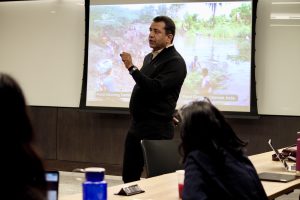
Convened by Goonj, the Rethinking Disasters Co-Creation Circle session focused on Goonj’s community-based SARRD framework (Societal Alliance for Resilience and Response to Disasters), developed through more than 27 years of grassroots work across South Asia. The session was designed as a collaborative discussion for participants to explore how cross-sector partnerships, community leadership, and pre-committed resources can strengthen disaster preparedness and response before crises occur.
Discussion focused on three core questions: what conditions make cross-sector alliances effective, how institutions can commit resources before disasters strike, and how local knowledge and lived experience can be more meaningfully integrated into disaster response systems. Participants reflected on the importance of moving disaster conversations beyond moments of emergency and into long-term institutional and policy planning, while building more inclusive systems shaped by communities most directly affected by climate and humanitarian crises. The session also took place alongside Disasters: Myths & Realities, a photography exhibition by Anshu Gupta, documenting community experiences during disasters across South Asia.
 |
 |
 |
 |
 |
 |
Partners








Watch Session Videos

Ambassador Khampa on the India-US Partnership
VideoAmbassador Namgya Khampa reflects on the evolving India-U.S. partnership, global geopolitical shifts, technology, trade, and the growing importance of strategic collaboration in a reordering world.

Recorded Message by Union Minister Jayant Chaudhary
VideoUnion Minister Jayant Chaudhary highlights the power of talent, education, and people-to-people ties in strengthening long-term India-U.S. collaboration and innovation-driven growth.

What the West Asia Conflict Reveals About Energy, Power & the Future of Global Order
VideoAmbassador (Retd.) Keshap and Dr. Vivek Lall examine how the West Asia conflict is reshaping energy security, supply chains, technology partnerships, and the future of global geopolitical order.

India in a Fragmenting Global Economy: Navigating Trade, Technology, and Strategic Autonomy
VideoThis panel explores how India is navigating geopolitical uncertainty, shifting supply chains, trade realignment, and technology competition while balancing growth, partnerships, and strategic autonomy.

The Transformative Power of AI: Accelerating Societal Development
VideoIndian American businessman and philanthropist Sunil Wadhwani discusses how scalable, low-cost AI solutions can accelerate healthcare, education, and public service delivery across underserved communities globally.

Reimagining Systems for Dignity and Agency in the Climate Era
VideoThis panel explores how climate action must center dignity, equity, and community agency, bringing together perspectives from public health, humanitarian response, sustainability, and communications.

When Systems Fail, Who Decides What Is Right?: Morality, climate, and power in A Guardian and A Thief
Indian-American author Megha Majumdar explores morality, migration, inequality, and climate disruption through her book A Guardian and a Thief, set in a near-future Kolkata.

Philanthropy in a World of Shrinking Global Funds: What Models will Last?
This panel examines how diaspora philanthropy is evolving across generations, and what models can sustain long-term impact amid shifting global funding priorities and donor engagement.